

November 3rd 2026
UN Global Compact: the Ten Principles and our CEO's article in Yearbook 2026
On 22 October 2026, UN Global Compact Network Poland held its annual Gala UN DAY. As every year, the Network Poland presented its Yearbook there. This year's edition includes an article by Maciej Jakimiec, CEO of Device Europe, on equal opportunities and inclusion.
Device Europe has been a participant in the UN Global Compact since January 2025, and in 2026 we submitted our first Communication on Progress. The new Yearbook is a good moment to recall what the initiative does, what its Ten Principles say and how they connect to our work.
What is the UN Global Compact?
The United Nations Global Compact is a voluntary initiative based on CEO commitments to implement universal sustainability principles. It was proposed by UN Secretary-General Kofi Annan in 1999 and launched in 2000. According to the UN Global Compact, it now brings together more than 25,000 companies and organisations in over 160 countries.
More than 60 Country Networks support participants locally. In Poland, this is UN Global Compact Network Poland.
Companies that join the UN Global Compact commit to:
- Doing business responsibly – in line with the Ten Principles on human rights, labour, environment and anti-corruption.
- Supporting wider UN goals – in particular the Sustainable Development Goals (SDGs).
- Reporting every year – through a Communication on Progress (CoP), which describes how the company puts the Ten Principles into practice.
The UN Global Compact is not a certification scheme or a membership organisation. It does not endorse or certify the sustainability performance of its participants. Companies take part as participants, not members.
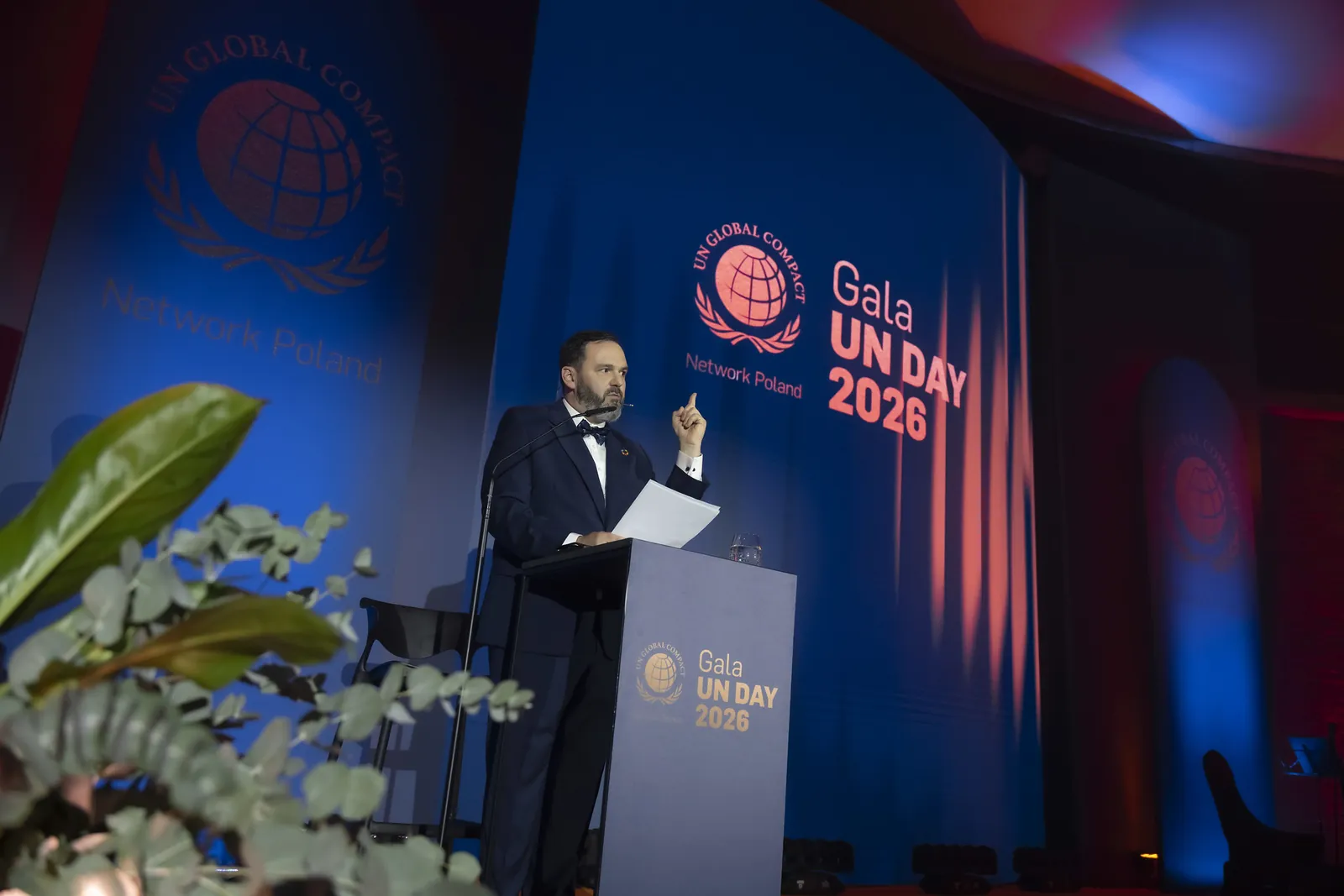
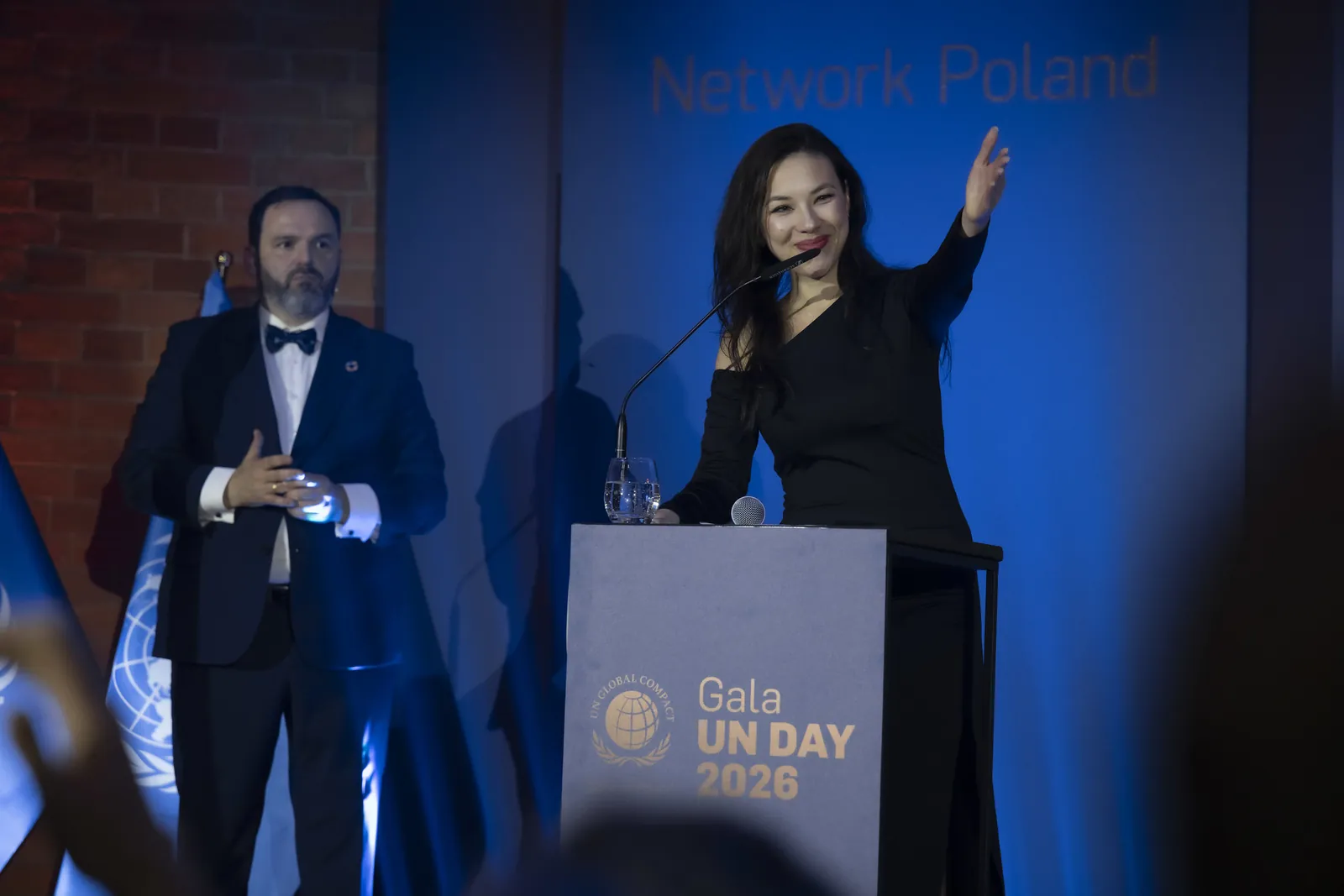
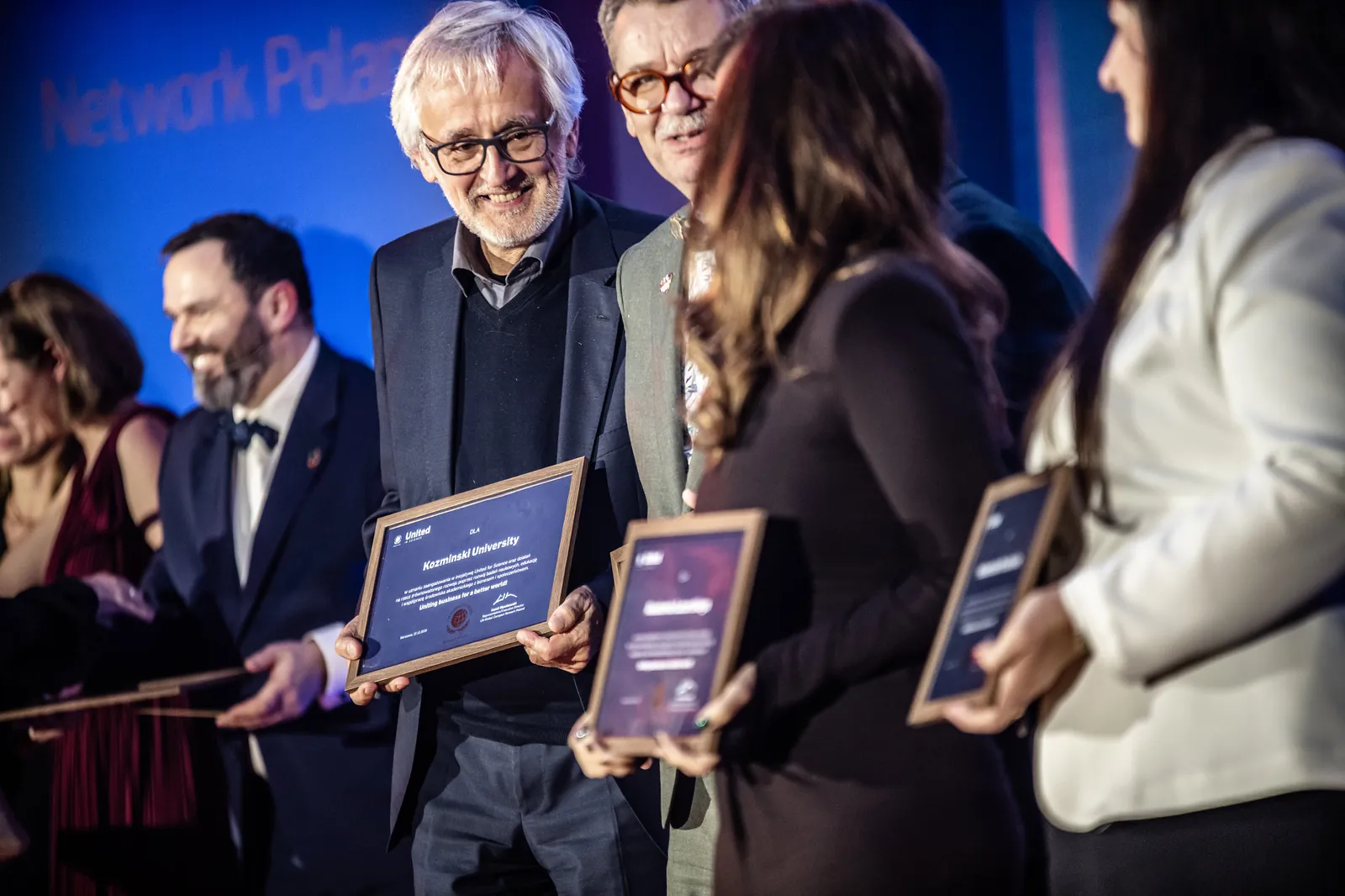
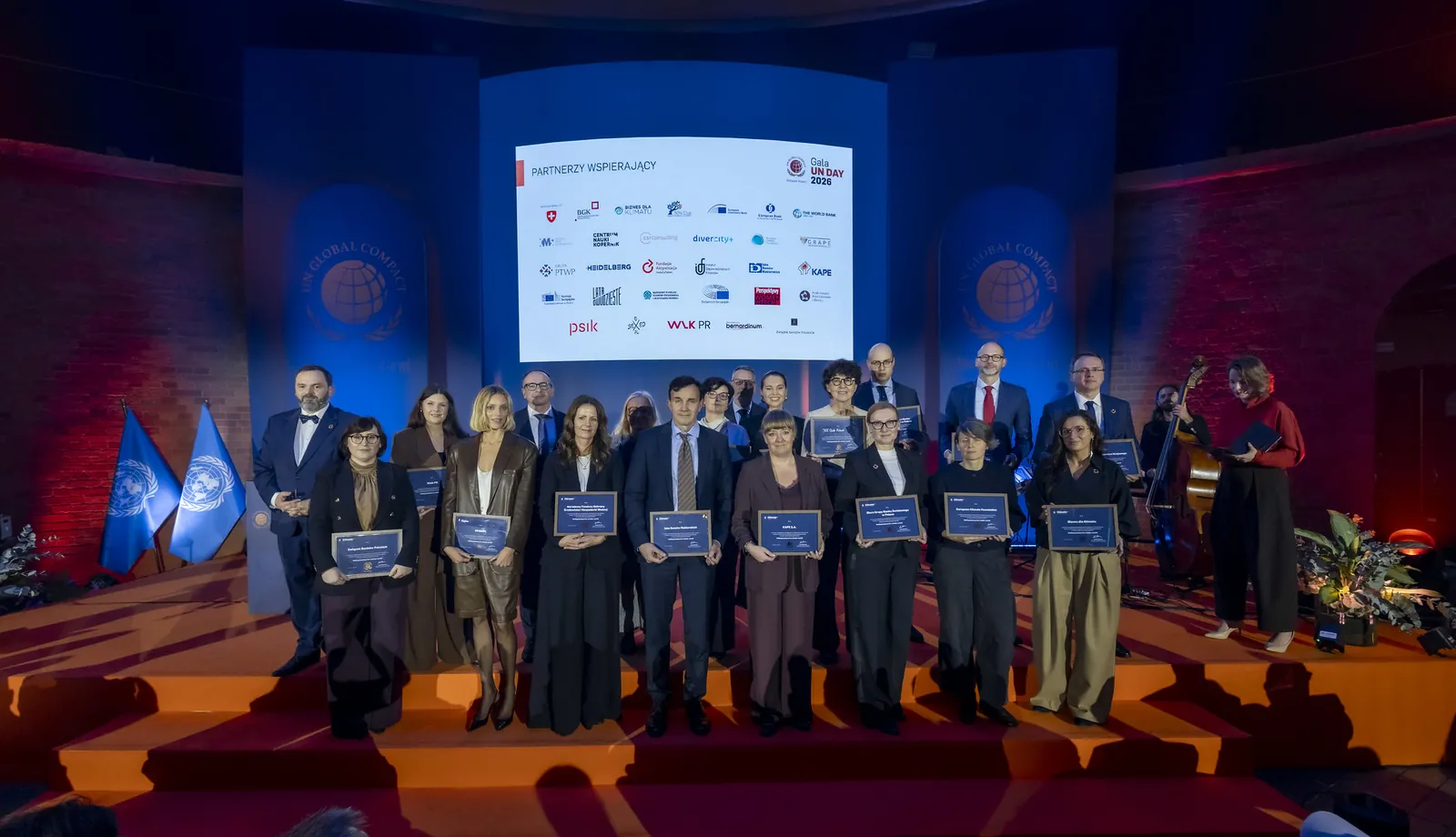
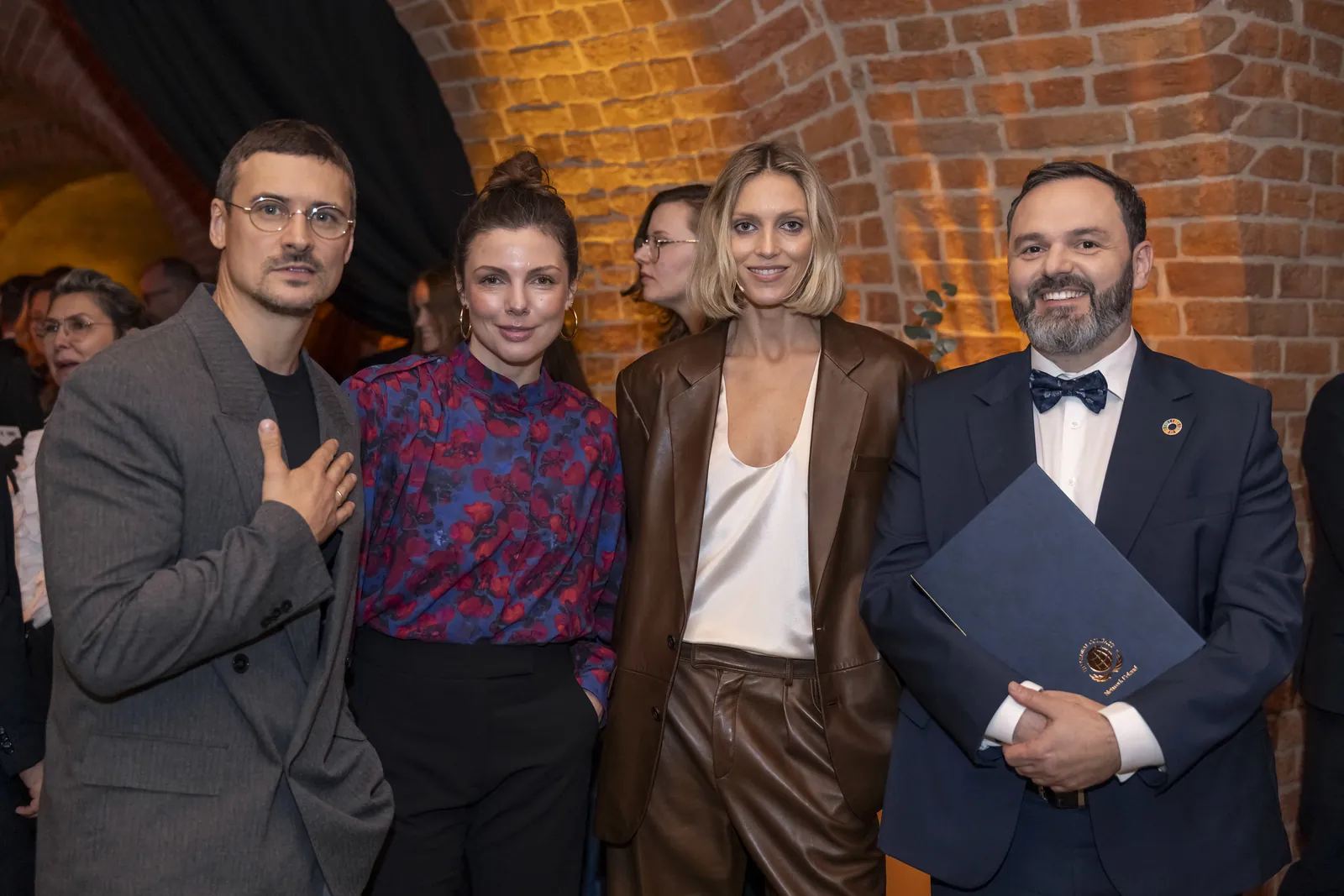
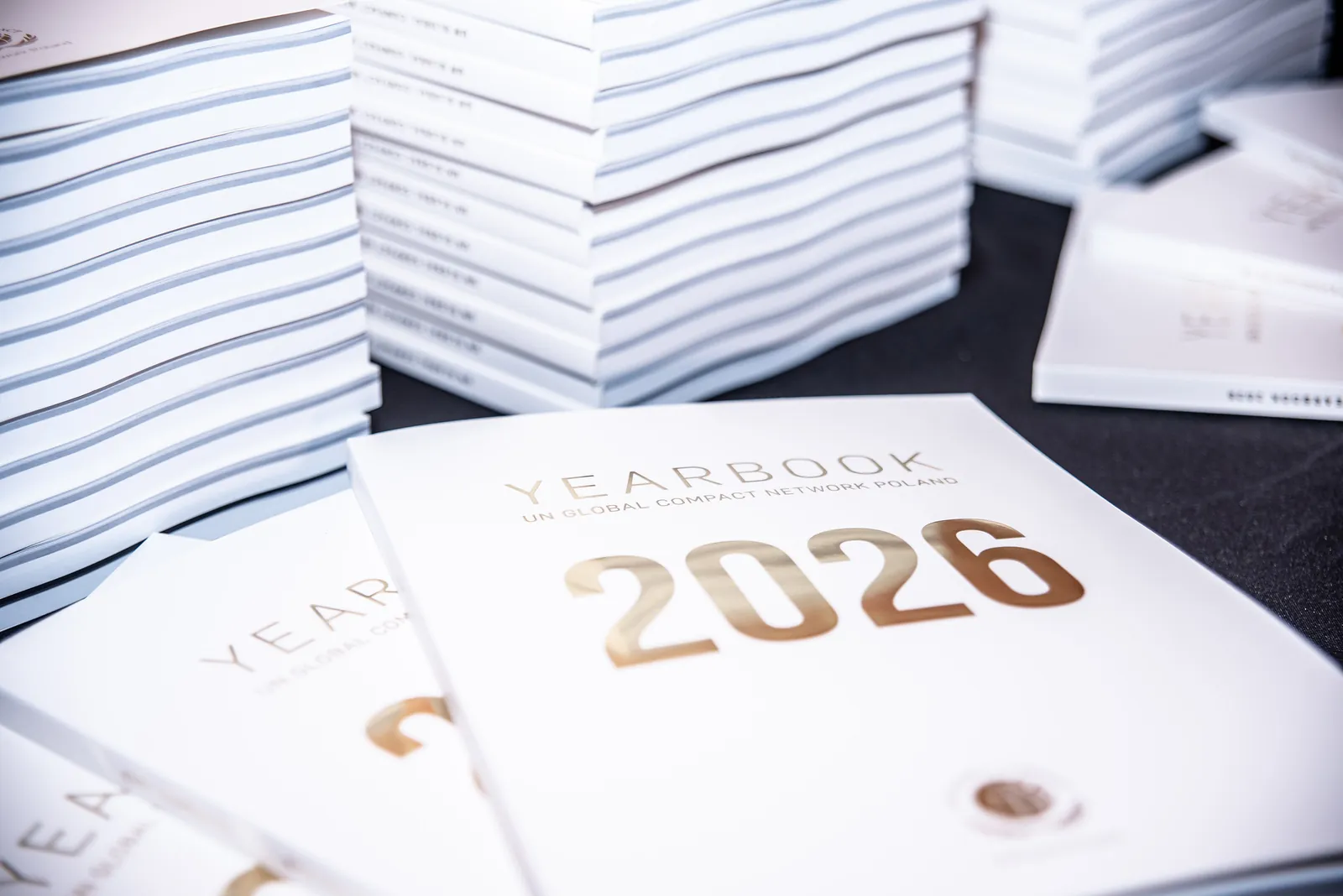
Photos from the UN Day 2026 Gala. Click to enlarge.
The Ten Principles
The Ten Principles are derived from the Universal Declaration of Human Rights, the International Labour Organization's Declaration on Fundamental Principles and Rights at Work, the Rio Declaration on Environment and Development and the United Nations Convention Against Corruption. The first nine principles date from the launch. The tenth, on anti-corruption, was added in 2004.
| Principle and area | Businesses should: |
|---|---|
| 1 – Human rights | support and respect the protection of internationally proclaimed human rights |
| 2 – Human rights | make sure that they are not complicit in human rights abuses |
| 3 – Labour | uphold the freedom of association and the effective recognition of the right to collective bargaining |
| 4 – Labour | uphold the elimination of all forms of forced and compulsory labour |
| 5 – Labour | uphold the effective abolition of child labour |
| 6 – Labour | uphold the elimination of discrimination in respect of employment and occupation |
| 7 – Environment | support a precautionary approach to environmental challenges |
| 8 – Environment | undertake initiatives to promote greater environmental responsibility |
| 9 – Environment | encourage the development and diffusion of environmentally friendly technologies |
| 10 – Anti-corruption | work against corruption in all its forms, including extortion and bribery |
Read the principles and their background on the UN Global Compact website.
Gala UN DAY 2026 and Yearbook 2026
UN Global Compact Network Poland held Gala UN DAY 2026 on 22 October to mark United Nations Day, which falls on 24 October each year. During the gala, the network presented its annual Sustainable Development Architect awards.
As every year, the gala also marked the premiere of the network's Yearbook. Yearbook 2026 summarises the network's activities, projects and initiatives from the past twelve months. It also brings together voices and good practices from businesses in Poland. You can read it on the UN Global Compact Network Poland website (in Polish).
The Yearbook also lists Device Europe among the companies taking part in the 2026 Polish edition of Target Gender Equality. This UN Global Compact accelerator helps companies set and reach targets for women's representation, equal pay and leadership in business.
Our CEO's article: equal opportunities and inclusion
In Yearbook 2026, Maciej Jakimiec writes about "Equal opportunities and inclusion – Device Europe and SDG 10".
He explains that our priority Sustainable Development Goals follow directly from our ITAD business model: SDG 12 (Responsible consumption and production), SDG 13 (Climate action) and SDG 17 (Partnerships for the goals). But responsible business is, above all, about people. That is why we are also strengthening the social side of our strategy. SDG 10 (Reduced inequalities) is where this commitment is most visible.
The article describes:
- A consistent policy framework – based on justice, equity, diversity and inclusion (JEDI) principles and international standards, including ISO 26000 and the guidelines of the UN, the OECD and the UN Global Compact. It includes our Diversity, Equality and Inclusion Policy and pay rules based on equal treatment. Our People & Culture team coordinates this work together with the Management Board.
- Fair pay and promotion – a transparent pay and promotion policy based on objective criteria. It is complemented by a share appreciation rights (SAR) programme, which gives employees, regardless of gender, an equal share in the company's future growth in value.
- Mentoring and inclusion programmes – a Mentoring and Sponsorship Programme, One Device (intercultural integration), Accessible Device (people with disabilities), Say IT with Device (English learning that evens out opportunities and supports communication, especially for employees aged 50+) and Equal Start (equal opportunities regardless of background).
- Beyond our own team – promoting diversity in our supply chain and a confidential, anonymous channel for reporting breaches of equal treatment.
The article is also open about what remains difficult. The biggest challenge is increasing the number of women in technical and operational roles, in an industry historically dominated by men. Another is keeping development opportunities equal during rapid technological change. Our next steps are more mentoring focused on future skills, closer monitoring of equality indicators and preparing for pay transparency requirements.
"We believe that reducing inequality is not only an ethical duty but also a source of real value. It builds trust, increases engagement and creates an organisation where development depends on competence."
Maciej Jakimiec, CEO, Device Europe
Our commitment as a UN Global Compact participant
On 2 January 2025, Maciej Jakimiec signed our letter of commitment to the UN Secretary-General, António Guterres. In it, we confirmed our support for the Ten Principles and committed to:
- making the principles part of our strategy, culture and day-to-day operations,
- engaging in collaborative projects that advance the broader development goals of the United Nations, particularly the SDGs,
- reporting on our progress every year through a Communication on Progress: a CEO statement of continued support and an online questionnaire.
Our participation started on 14 January 2025. In 2026, we submitted our first Communication on Progress, based on our 2025 Sustainability Report. The report covers the calendar year 2025 and was prepared with reference to the GRI Standards. Our next Communication on Progress is due by 31 July 2027.
Our participant profile and letter of commitment are public on the UN Global Compact website.
Some principles connect directly to our daily work. Principles 7–9 on the environment are close to our ITAD model: we securely erase data, refurbish IT equipment and return it to use, so that hardware stays in use for longer. Principle 6 on non-discrimination is at the heart of the SDG 10 work described in our CEO's article.
Commitments and independent assessments
The UN Global Compact is a framework of commitments, not an audit. Independent assessments of our practices come from elsewhere. Our management systems are certified to ISO 9001, ISO 14001, ISO 45001 and ISO/IEC 27001, and we hold R2v3 certification. We are also a Certified B Corporation and hold the EcoVadis Platinum Medal. The EcoVadis methodology itself draws on international standards that include the UN Global Compact principles.
FAQ
What is the UN Global Compact?
It is a voluntary United Nations initiative based on CEO commitments to implement universal sustainability principles. Launched in 2000, it brings together more than 25,000 companies and organisations in over 160 countries.
What are the Ten Principles of the UN Global Compact?
They are ten principles in four areas: human rights (Principles 1–2), labour (3–6), environment (7–9) and anti-corruption (10). They are derived from the Universal Declaration of Human Rights, the ILO Declaration on Fundamental Principles and Rights at Work, the Rio Declaration on Environment and Development and the UN Convention Against Corruption.
Is Device Europe part of the UN Global Compact?
Yes. Device Europe sp. z o.o. has been a participant in the UN Global Compact since 14 January 2025 and submitted its first Communication on Progress in 2026. The initiative is not membership-based, so companies take part as participants, not members.
Does the UN Global Compact certify its participants?
No. The UN Global Compact does not endorse or certify the sustainability performance of its participants. Participants commit to the Ten Principles and report on their progress every year.
Does Device Europe publish a sustainability report?
Yes. Our 2025 Sustainability Report covers the calendar year 2025 and was prepared with reference to the GRI Standards. It was published on 7 July 2026.
Where can I read Yearbook 2026?
Yearbook 2026 is available on the UN Global Compact Network Poland website. The publication is in Polish.
Sources: UN Global Compact – The Ten Principles, UN Global Compact – home page, UN Global Compact – Device Europe sp. z o.o. participant profile, UN Global Compact – Target Gender Equality, Device Europe – 2025 Sustainability Report, UN Global Compact Network Poland – Yearbook 2026, UN Global Compact Network Poland – Sustainable Development Architects 2026, Wikipedia – United Nations Global Compact